Renting a board in Cocoa Beach is easy — there are surf shops along A1A, a cluster downtown around Ron Jon, and more around the pier, and most of them rent soft-tops and longboards by the hour, the day or the week. What is not always easy is knowing which board to take and what you are actually paying for.
We do not rent boards ourselves: every lesson we run includes a surfboard, a rash guard and a wetsuit. So this guide is written the way we explain it on the sand — where rentals happen, what to check before you walk out with one, and when a lesson works out cheaper than renting plus guessing.
Rent the board you can stand on
A big soft-top or a longboard floats, paddles easily and is stable. A shortboard will make a first session miserable.
Check the leash and the fins
Two minutes on the sand saves you a swim back to the beach with a board you cannot control.
Gear adds up
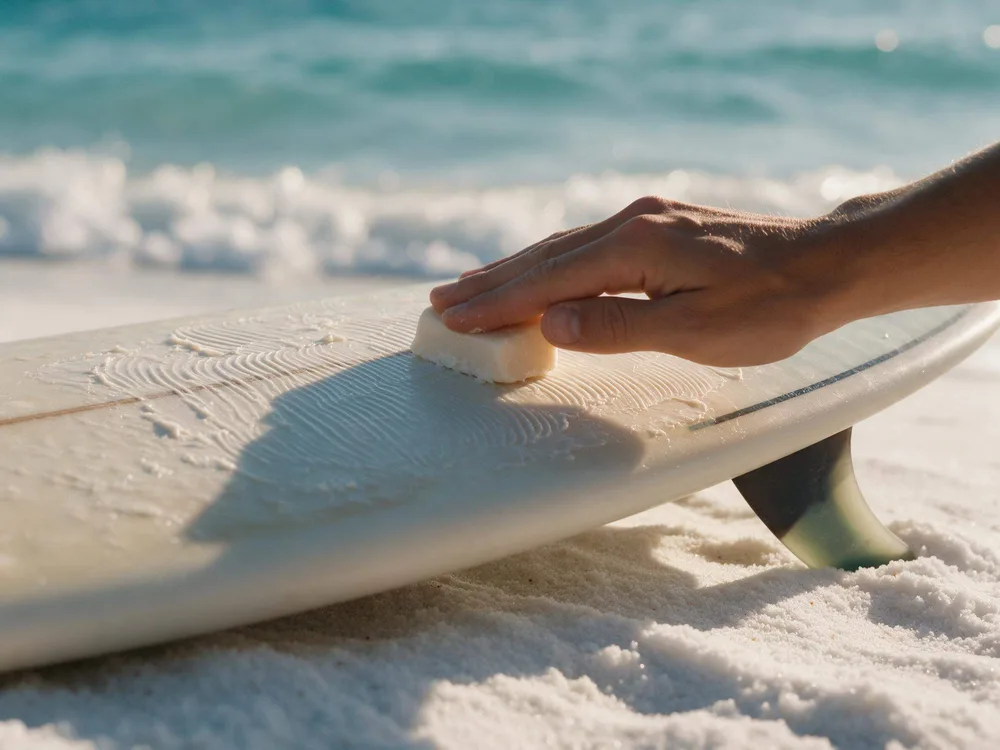
Board, wetsuit and rash guard are three separate rentals at most shops. A lesson bundles all of it.
Book early in season
Spring break and holiday weekends empty the racks by mid-morning. Reserve the day before.
Where surfboard rentals happen in Cocoa Beach
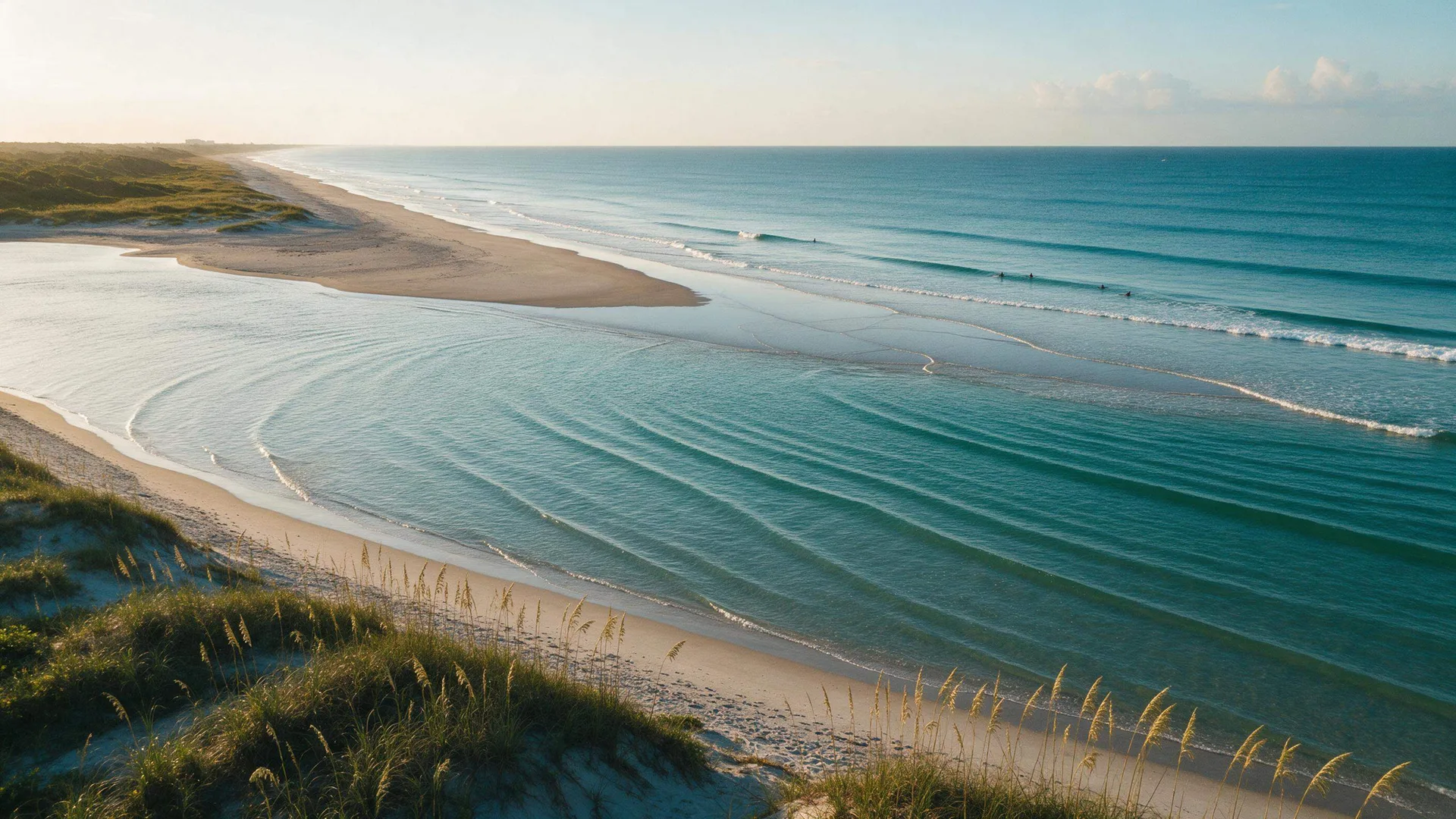
The rental shops are strung along A1A, with the densest cluster near the pier and another around the Ron Jon end of downtown. Most carry soft-top longboards for beginners, a few hardboards for people who already surf, and the rash guards and wetsuits that go with them.
Walk in rather than ordering online: you want to see the board, check its condition and have someone size it to you. In spring break, on holiday weekends and during a good swell, the beginner boards are the first thing to go, so call ahead or reserve the afternoon before you want to surf.
The city and county beach accesses are separate from the shops — our beach access and parking guide covers where to park once you have the board.
What to check before you leave the shop
A rental board has been used by a lot of people, and the difference between a good session and a frustrating one is often a two-minute inspection on the pavement outside.
Put the board on the ground, press the deck with your palm and look for soft spots or delamination. Check that all the fins are in, tight and undamaged. Pull the leash at both ends — the rail saver and the ankle strap — and look for cracks in the plug. Ask what happens if you ding it, and whether the rental includes a damage waiver, because a cracked rail on a hardboard can cost more than the rental itself.
- Deck: no soft spots, no lifting glass
- Fins: all fitted, no chips, screws tight
- Leash: no cracks at the plug or the ankle strap
- Damage policy: know the excess before you sign
- Size: roughly head-plus height for a beginner, and thick enough to float you
Soft-top or hard board?
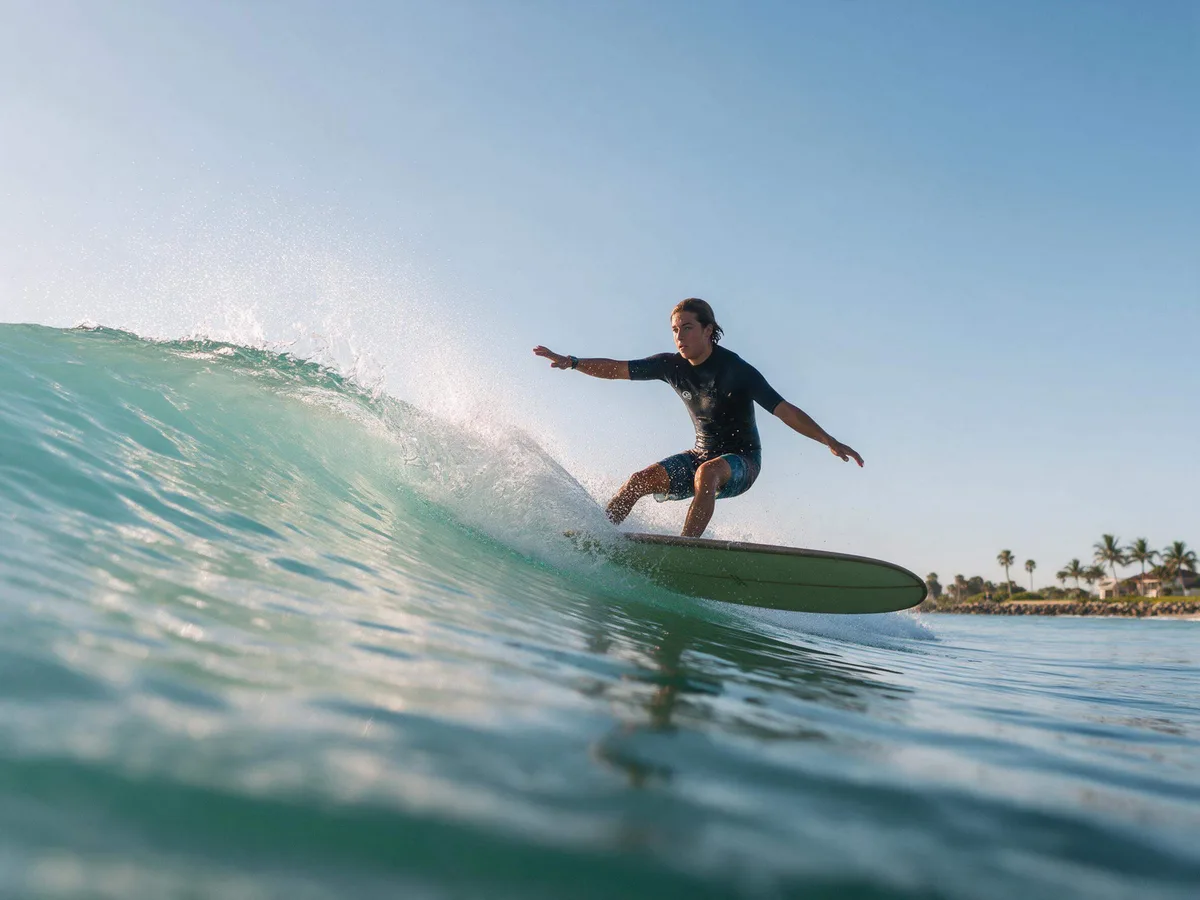
If you have surfed fewer than ten times, take the soft-top. They are buoyant, forgiving, paddle quickly onto small waves and — the part that matters — they do not hurt when they hit you. Cocoa Beach's inside sections are shallow, so a soft board is also kinder on the sandbar.
A hardboard makes sense once you can paddle out, turn and ride along the face. Renting one before that usually means more time falling and less time riding, and a ding you will be paying for. If you are between the two, ask for a longboard rather than a shortboard: the extra length is the difference between catching the wave and watching it go past.
What a rental actually costs
Most Cocoa Beach shops price rentals by the hour, half day, day or week, and the rate varies with the season and the board. Few quote it the way a visitor actually spends it: board plus wetsuit plus rash guard, for two hours, for two people.
Add it up before you decide. A rental also leaves you without anyone to read the conditions, pick the access point or tell you why you keep falling — which is the part a lesson provides. Our lessons are $99 per surfer for one hour and $169 for two, and the board, rash guard and wetsuit are included in that price.
Renting or taking a lesson
Rent if you already surf and simply do not want to travel with a board. You know the break you want, you can read the wind and the tide, and you will be in the water within ten minutes of parking.
Take a lesson if this is your first session, your first time on this coast, or your first time in a few years. The instructor chooses the sandbar that is working, stands beside you in waist-deep water, and hands you a board sized to your weight. For one person for one hour, a lesson with everything included is often close to the cost of renting the same gear and hoping.
If you are only here for a day
Morning is the window. The sea breeze fills in after midday and chops the surface, so a 9:00 AM start gives you the cleanest water and the emptiest lineup. If you are driving over from Orlando or coming in on a cruise ship, build the day around that rather than around lunch.
Bring swimwear, a towel, sunscreen and water. Leave valuables in the car, not on the sand. And check the surf report before you go: a flat summer day is a fine day for a paddleboard and a poor one for a rental you were hoping to stand on.
Ready to try it yourself?
Private, kids and group lessons run every day from 9:00 AM to 5:00 PM. Board, rash guard and wetsuit included.
Andrew Kinsman
Andrew owns Florida Luxury Surfing and teaches private, kids, family, couples and group lessons on this beach. The local detail in this guide is the same thing he tells guests on the sand before their first session.
Read his story