Most adults who book a surf lesson ask the same three questions before they arrive: am I too old, am I fit enough, and will I actually stand up? The honest answers are no, probably yes, and very likely in your first session.
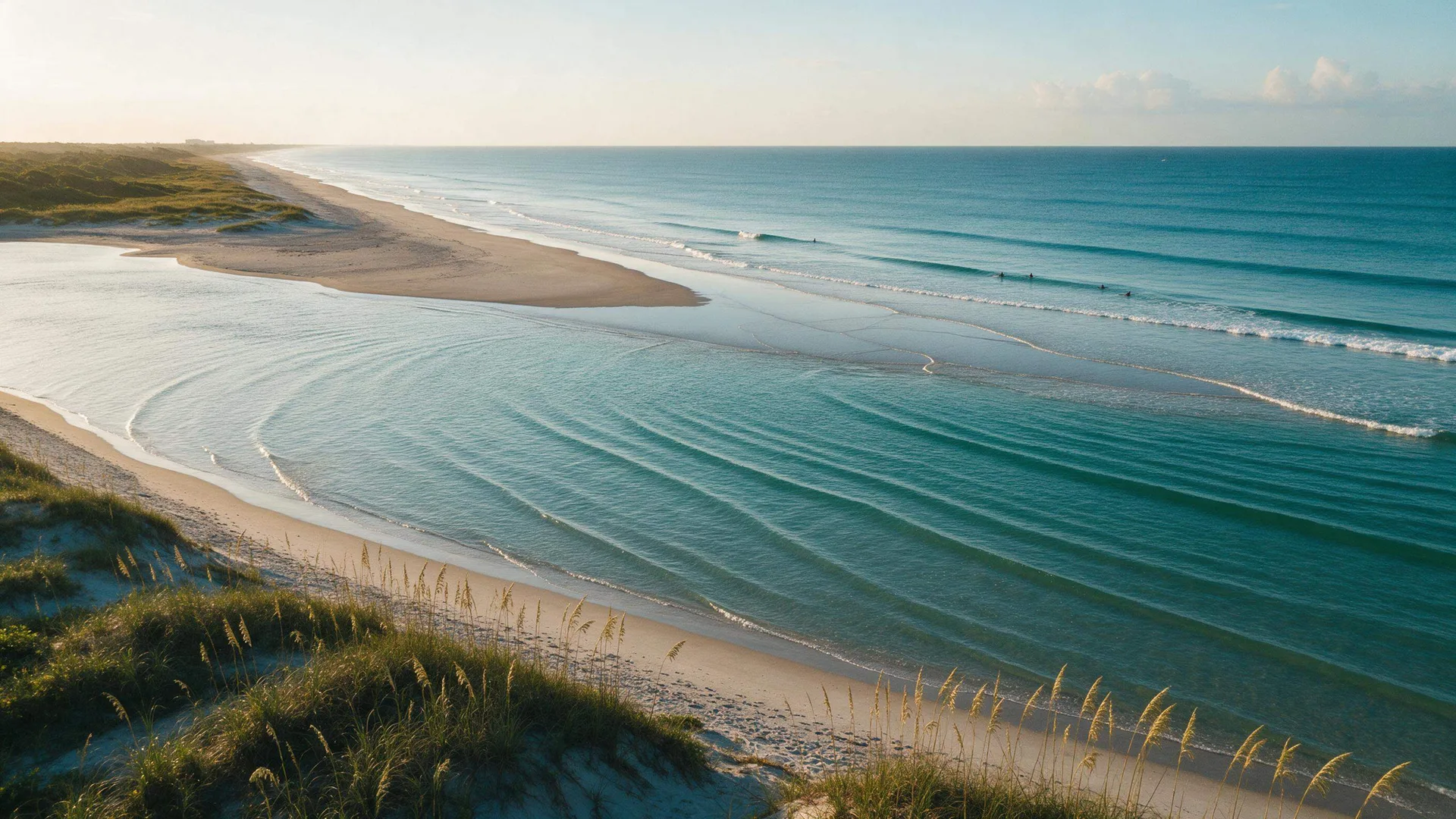
A first lesson happens in waist-deep water over sand, on a big soft board, with an instructor beside you the entire time. Nobody is paddling a kilometre offshore or duck-diving under breaking waves. It is the gentlest version of surfing there is, and Cocoa Beach is one of the best places in Florida to learn it.
No fitness test
If you can swim a short distance and stand up from sitting on the sand, you have enough for a first lesson.
The inside is the calm part
Lessons run where you can stand up, in the whitewater, not out in the unbroken sets.
Two hours beats two days
A single two-hour session almost always beats two separate one-hour bookings — the second hour is where it clicks.
Big, soft and stable
You learn on a foam board sized to your weight. It paddles easily and does not hurt when it clips you.
You are not too old, and you are not too unfit
We teach all ages and skill levels. Adults book private lessons for exactly the reasons you would expect: a holiday, a birthday, a long-standing item on a list, or simply wanting to be in the water instead of watching from the sand.
The water does the heavy lifting. You stand between waves, the board is oversized for stability, and your instructor positions you for each one. You are never swimming hard, never holding your breath and never out of your depth.
If you have a shoulder, knee or back that complains, say so when you book. Working in the inside is the lightest possible form of surfing, and it is easy to shorten the paddling and keep the session comfortable.
What the first lesson actually looks like
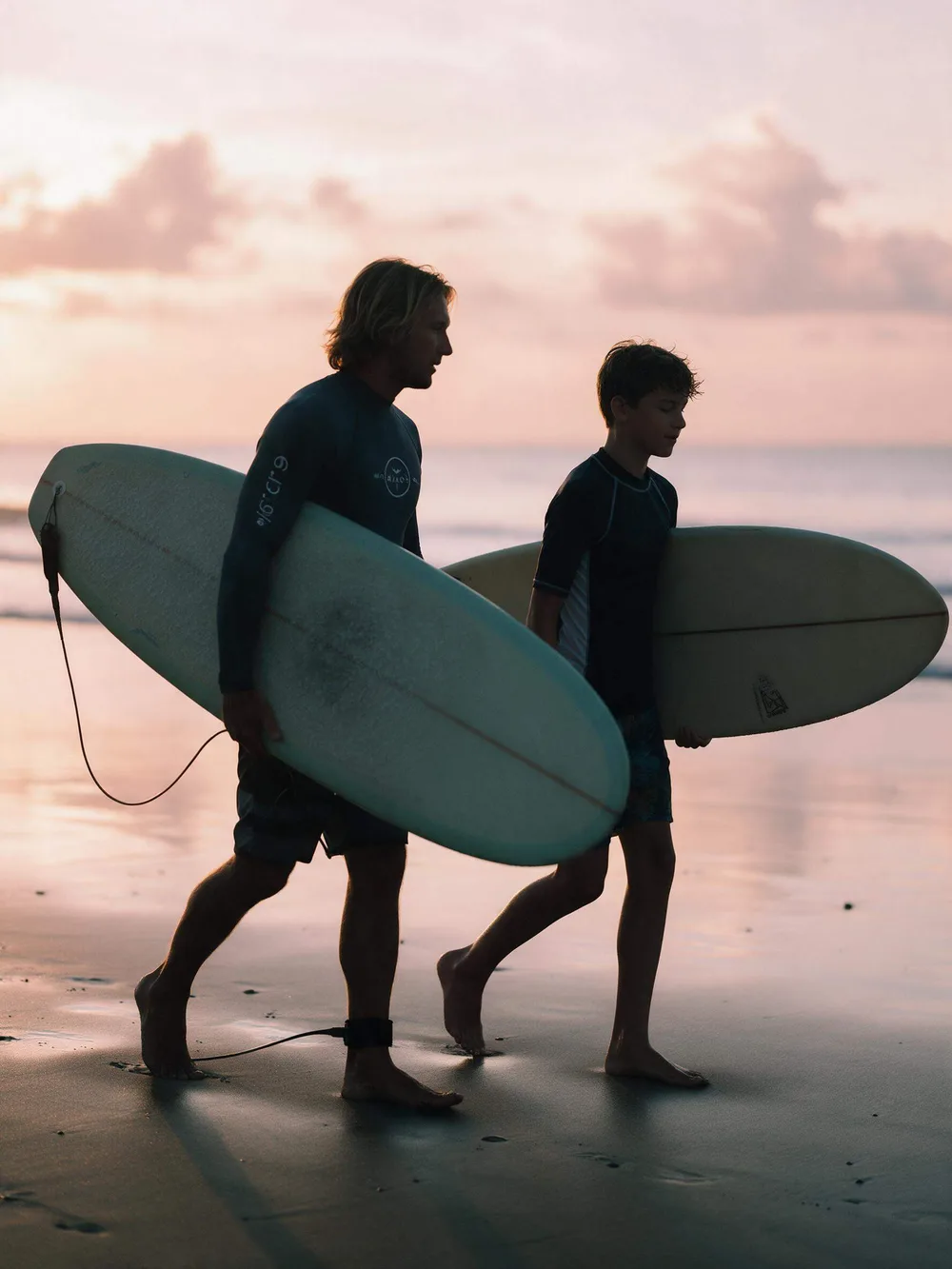
Every lesson starts with ten minutes on the sand: how the beach works, how to read a rip current, how to carry and handle the board, and how you will get to your feet. Then you walk in.
The technique is broken into pieces and practised one at a time, with your instructor holding the board steady in waist-deep water until the movement is familiar. After that you catch whitewater, stand up, ride to the sand, and walk back out to do it again.
- Ten-minute briefing on the sand, including rip currents and beach awareness
- Pop-up practice with the board held and the water at your waist
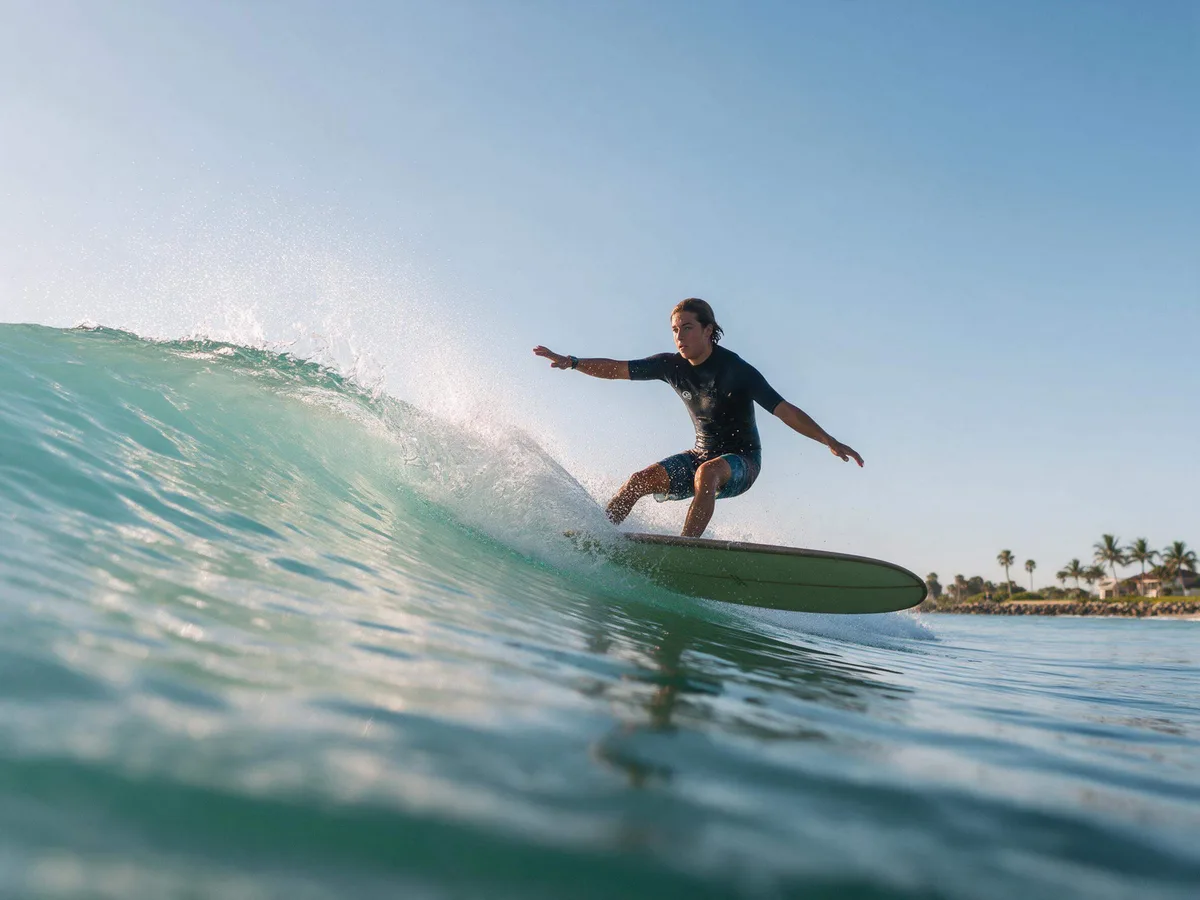
- Your first ride on a broken wave, with coaching the whole way
- Repeat until it feels natural — most adults are standing within the session
Falling is part of it — here is how to do it well
You will fall off, and that is expected rather than a problem. Because it happens in waist-deep water over sand, a fall is closer to a splash than a scare.
The habit worth building is letting go. Holding onto a board is what causes bumps and twisted knees, so the rule is simple: if you are going down, push the board away, cover your head with your arms and land flat.
- Let go of the board rather than grabbing it
- Arms over your head as you go down
- Stand up as soon as your feet touch the sand
- Keep the board between you and the beach, not between you and the next wave
The hard part is paddling, not standing
Adults tend to expect the pop-up to be the difficult bit, and it turns out to be the paddling. You use your shoulders to move the board and your legs to get up, which is why the board is deliberately big: it paddles fast and floats high, so you spend less energy and more time on your feet.
A two-hour lesson includes rest between waves, water on the sand and no pressure to keep going when your arms are done. If you are tired, say so — the instructor would rather pause for five minutes than have you paddle out exhausted.
How adults usually progress
Lesson one is about standing on the whitewater and understanding the beach. The second hour of a booking is where that becomes reliable — the same movement, over and over, until it stops being a decision.
After that, progress is about water time rather than talent. A second session typically adds paddling out to the unbroken lines and turning the board, and we move you onto a slightly different board when you are ready for it. Some surfers want one lesson to say they did it; others come back every holiday, and both are the right way to learn.
- Session one: the beach, the pop-up, standing on whitewater
- Session two: paddling out, catching unbroken waves, turning
- After that: a board sized to your progress and more time in the water
If the ocean makes you nervous
That is the most common thing adults tell us, and it is a sensible instinct rather than a weakness. The answer is conditions: we choose the break on the morning of your lesson based on swell, wind and tide, and we keep first lessons in the softest, shallowest water available on that day.
Mornings are almost always the calmest window in Cocoa Beach, which is why lessons start at 9:00 AM. If the swell is too big or the wind is blowing the surface to pieces, we would rather move your session than take you out in junk — you can stand up and walk out whenever you want, and nobody will push you past that.
Ready to try it yourself?
Private, kids and group lessons run every day from 9:00 AM to 5:00 PM. Board, rash guard and wetsuit included.
Andrew Kinsman
Andrew owns Florida Luxury Surfing and teaches private, kids, family, couples and group lessons on this beach. The local detail in this guide is the same thing he tells guests on the sand before their first session.
Read his story