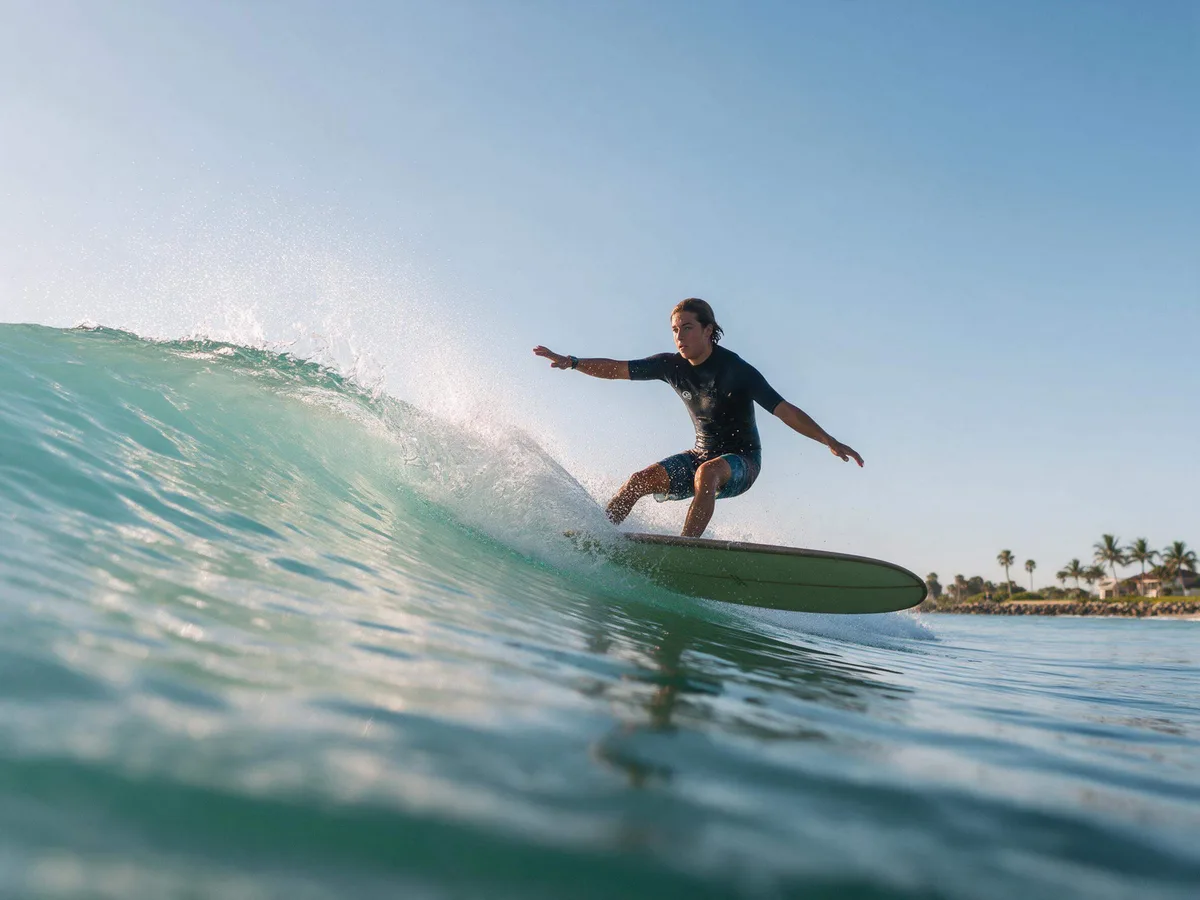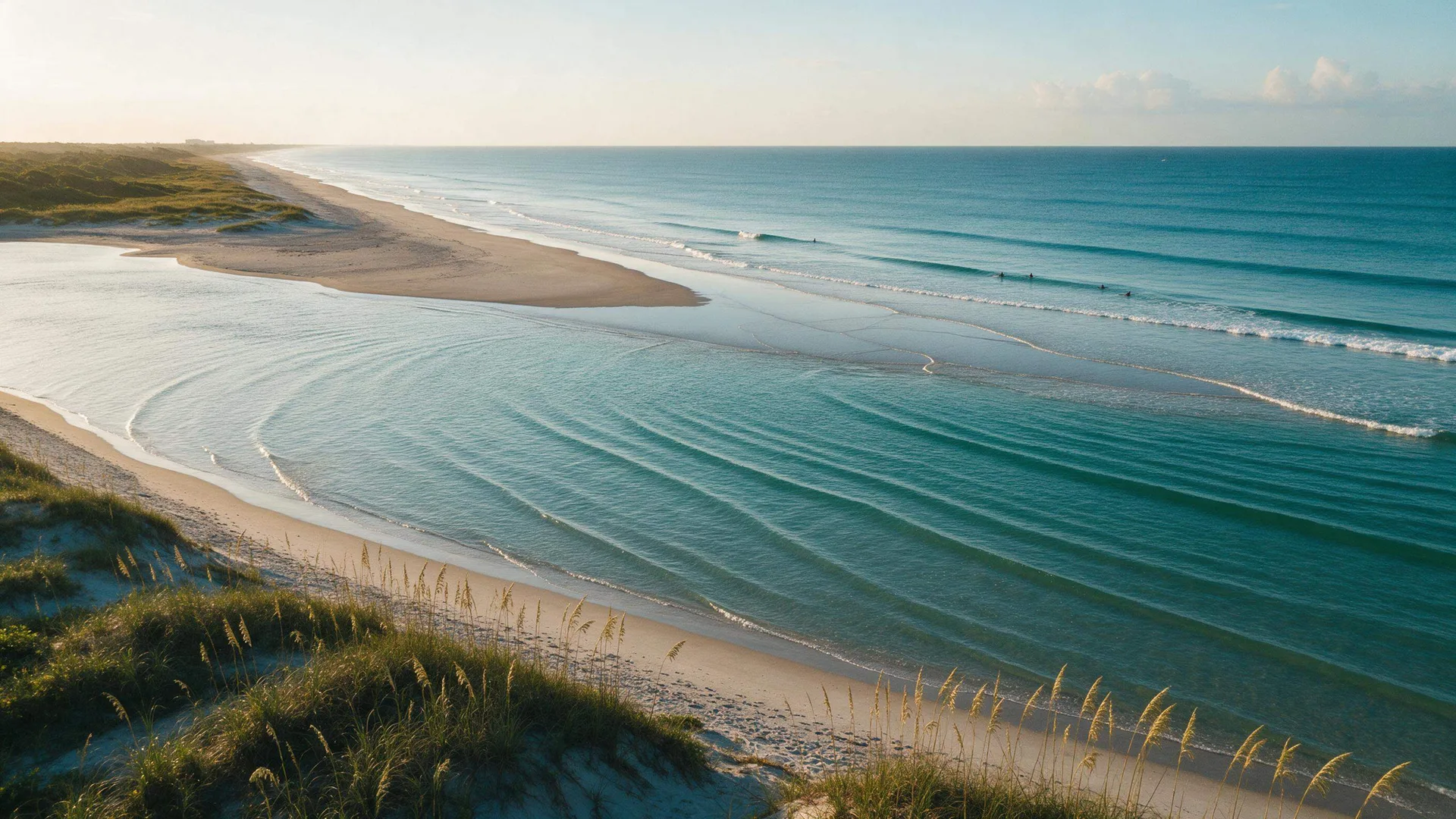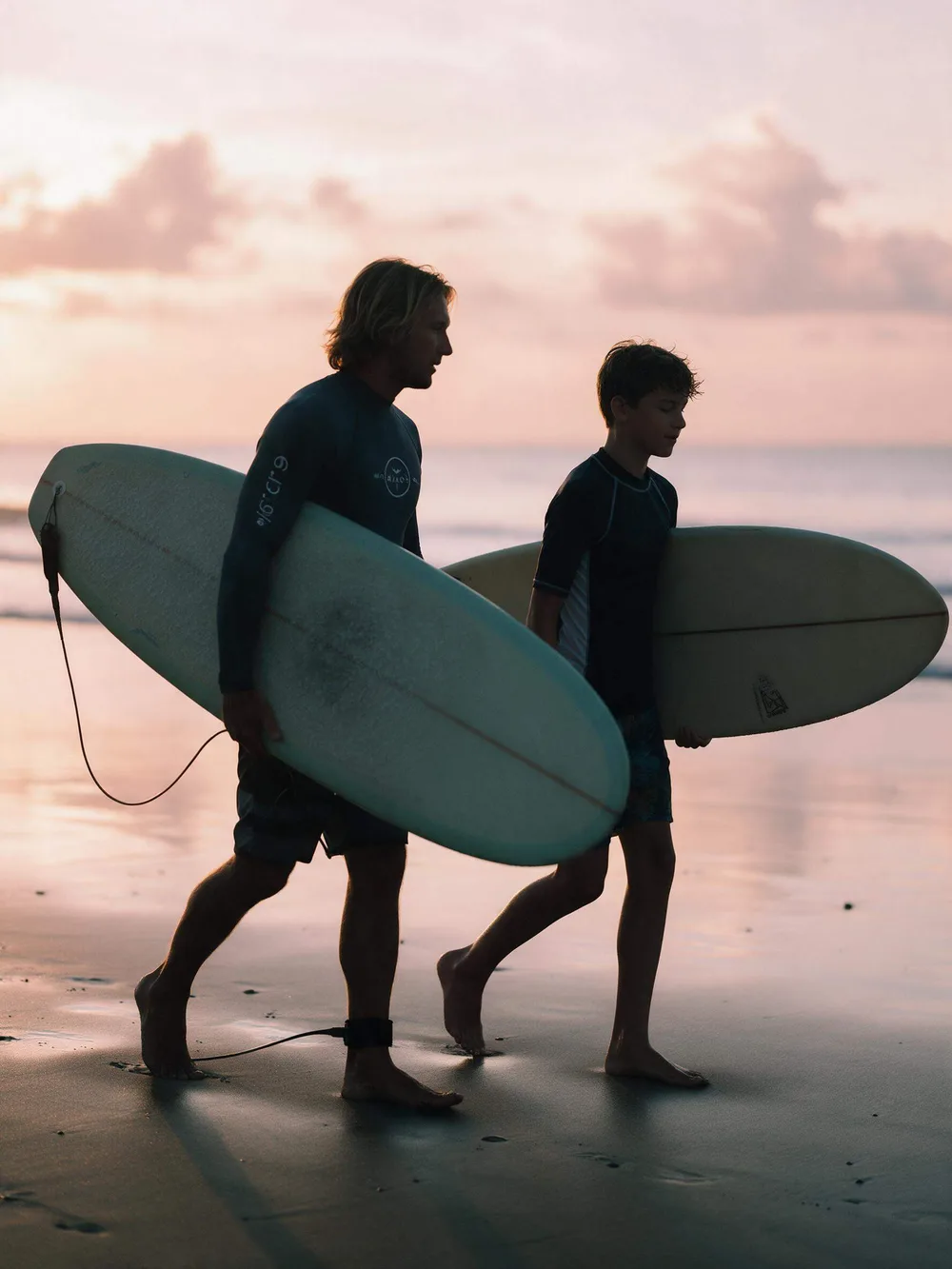
Cocoa Beach has more surf schools per mile than almost anywhere in Florida, and most of them look identical on a booking page: a price, a smiling photo and a promise that you will stand up. The differences show up on the sand.
This is the checklist we would use to pick a school here — the six things that actually change your first lesson, and the questions worth asking before you pay.
Ask the ratio first
One instructor to one surfer behaves nothing like one instructor to six. It is the single biggest difference between schools.
Check whether gear is included
A cheap lesson plus board and wetsuit rental is often the most expensive way to learn.
Ask what happens in bad weather
A school that reschedules when the ocean is ugly is worth more than one that never cancels.
Read the reviews for detail
Names, dates and specifics are real. Vague five-star paragraphs are usually not worth much.
Start with the instructor ratio
Ask how many surfers share one instructor. A 1:1 private lesson means corrections happen in real time, the instructor calls the right wave for you, and you are not waiting your turn on a shared board. A 1:6 group lesson is a fun morning but a very different learning curve — you will spend most of it watching.
Neither is wrong; they are different products at different prices. The mistake is paying private prices for a group experience, or booking a group lesson for a nervous seven-year-old.
Check what is included, in writing
Surfboard, rash guard and wetsuit should be part of the price. When they are not, the rental adds up quickly and you may end up on a board that is the wrong size — which is the most common reason a first lesson goes badly.
Ask specifically: is the board included, is a wetsuit included in winter, and is there anything else to pay on the day? A school that answers those three questions clearly is usually straightforward about everything else.
Ask where you will actually be in the water
For a first lesson the answer should be waist-deep water, over sand, with an instructor standing beside the board. If a school plans to send you out to the lineup on your first morning, or teaches over reef, look elsewhere.
Ask about the safety briefing too. Rip currents are the real hazard on the Space Coast, not the size of the wave, and every surfer should hear how to spot one and how to get out of it before anyone paddles out. Ask whether lessons stay near a lifeguarded stretch of beach.
Ask what happens when conditions are bad
Cocoa Beach gets blown-out days, big shorebreak and the occasional flat spell. The question is not whether a school ever moves a session, but whether it will: a good one moves you to a cleaner window or a smaller sandbar and tells you why.
Be wary of any school that will take a beginner out in anything to avoid refunding. That is the moment the lesson stops being about you.
Read the reviews and look at the photos
Reviews are most useful when they name an instructor, a date or something specific about the session. Those are hard to fake and they tell you what the school is consistently good at.
Photos tell you the same thing visually. Real lesson photos show waist-deep water, group sizes, soft-top boards and people actually falling in — not just a perfect wave with nobody in frame. Stock imagery is a hint that the marketing has more effort in it than the teaching.
Six questions to ask before you book
Take these to any school on the Space Coast, including us. The answers matter more than the price on the banner.
- How many surfers will share my instructor?
- Is the board and wetsuit included in the price?
- Will I be in waist-deep water I can stand up in?
- What do you cover about rip currents before we paddle out?
- What happens if the conditions are bad on my date?
- What ages and group sizes do you teach, and what happens if my child gets nervous?
How we answer those questions
One instructor, one surfer on private lessons; small groups with multiple instructors once you are three or more. Board, rash guard and wetsuit always included. Waist-deep water over sand, an instructor beside the board, and a rip-current briefing before anyone gets wet.
If the morning is blown out we will suggest a better slot rather than take you out in junk, and requesting a slot costs nothing. Kids from age 6 ride soft-top boards sized for them, with a parent free to watch — or join in — from the sand.
Ready to try it yourself?
Private, kids and group lessons run every day from 9:00 AM to 5:00 PM. Board, rash guard and wetsuit included.
Andrew Kinsman
Andrew owns Florida Luxury Surfing and teaches private, kids, family, couples and group lessons on this beach. The local detail in this guide is the same thing he tells guests on the sand before their first session.
Read his story